Wan 2.7: The Definitive Guide to Physics-Aware AI Video Generation
If you have been closely tracking the evolution of generative text-to-video capabilities over the past 24 months, you will know that the "holy grail" was never purely about achieving photorealistic textures or rendering the perfect cinematic lighting. Lighting and texture were solved extremely early. The real, seemingly insurmountable barrier was physics. Traditional diffusion models operated fundamentally as image calculators, hallucinating the next frame based purely on visual proximity to the last. They had absolutely zero inherent understanding of gravity, fluid dynamics, anatomical joints, spacial persistence, or momentum.
Wan 2.7 has become one of the most important enterprise names in AI video precisely because it is the first model to systematically solve this hallucination crisis. It introduces a paradigm known as Physics-Aware Generation. When a creative director requests a hero loop of a glass of wine shattering on marble, prior models would melt the glass into liquid, morph the table into the sky, or simply blur the impact point until the calculation ended. Wan 2.7, inversely, calculates the kinetic momentum. It shatters. It bounces. The shards carry accurate shadows.
Chapter 1: Deconstructing "Physics-Aware" Architecture
"Physics-aware" is an incredibly easy marketing phrase to throw around, but in Wan 2.7 it refers to a very specific set of interconnected neural architectures. At the core, Wan 2.7 isn't heavily running a literal game-engine physics simulation (like Havok or Unreal spatial engines). Instead, it has internalized generalized Newtonian logic through a massive, curated dataset specifically annotated for physical interactions.
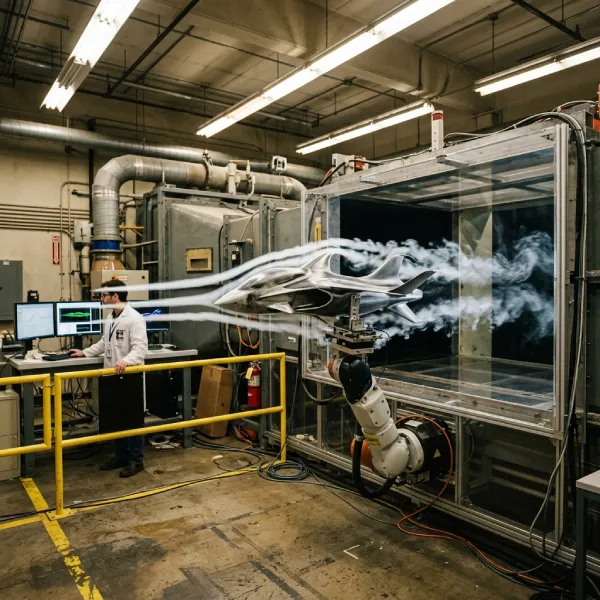
This internalized physics engine shines brightest in four notoriously difficult generative scenarios:
01Cloth & Fluid Dynamics
When a subject turns rapidly, fabric does not instantly teleport to their new hip position. It drags. It flows. It carries kinetic inertia. Wan 2.7 respects this inertia, enabling sweeping gowns and surging water to behave naturally rather than dissolving into noise.
02Ray-Traced Reflections
If a product rotates on a glossy black studio pedestal, the reflection must inversely track along the surface. Older models would frequently paint the reflection directly onto the geometry of the product itself. Wan 2.7 correctly separates the spatial planes.
03Anatomical Joint Persistence
Generative video is infamous for subjects walking backwards, crossing legs through each other, or mutating extra limbs during transitions. Wan 2.7 utilizes a latent skeletal anchor, ensuring that bipedal creatures carry weight and step with accurate gravitational cadence.
04Multi-Plane Parallax Camera Moves
When calling for a "drone tracking shot moving through a dense forest", the trees closest to the lens must whip by faster than the trees 500 feet back. Wan 2.7 executes perfect Z-depth dimensional parallax.
Chapter 2: The End of "Aesthetic Hallucination"
To truly appreciate what a "physics-aware" engine provides, we have to look closely at what it prevents. The enemy of commercial video production is what I call "Aesthetic Hallucination." This occurs when an AI generates a stunning, painterly still frame, but the moment it begins to move, the visual logic crumbles because the model doesn't know what is behind the subject it just generated.
Because Wan 2.7 actively calculates the 3D VAE volume of the scene, it knows that if an actor's hand briefly blocks the view of a coffee cup, the coffee cup does not cease to exist. When the hand moves away, the cup will still be there. Object permanence—a biological trait humans develop at eight months old—is finally mathematically present in a diffusion model, as noted in our comprehensive hands-on test.
Technical Study: Gravity & Mechanics
This real-time generation demonstrates perfect gravitational acceleration and structural integrity during high-velocity impacts—a key feature of the Wan 2.7 physics model.
Chapter 3: Strategic Impacts on the Editorial Workflow
What does physics-awareness actually mean for the editorial desk? If your site goal is to explain a physical product clearly—let's say a hardware smartwatch or a new ergonomic office chair—then the real prompt workflow is not just "spam the generator until you get a lucky clip." The real workflow heavily pivots toward intentional, storyboarded proof generation.
- Homepage Confidence: The homepage hero needs to establish immediate trust. When visitors enter the site and see physics breaking on an auto-playing loop, that trust evaporates in milliseconds. Wan 2.7's stability ensures your hero asset feels like it was filmed on an ARRI Alexa, not generated in a basement.
- Product Detail Verification: Review articles explain strengths in depth. When creating a breakdown for a rugged laptop case bouncing off concrete, older AI platforms would just blend the laptop into the concrete upon impact. Wan 2.7 allows you to generate aggressive product testing clips that look highly authentic.
- Cost Displacement in Tutorials: Support pages and FAQs often require highly expensive 3D animation to explain complex mechanical workflows. A physics-aware ideo model can generate those explainer animations purely from text, substituting for thousands of dollars of Cinema4D artist time.
The Definitive Takeaway
Wan 2.7 is not just upgrading the "resolution" of AI video. We are way past resolution being a competitive moat. Wan 2.7 is transforming the entire medium because it is addressing the core underlying geometry of reality.
The right conclusion is not simply "This looks amazing." The right conclusion is: "Because this model understands how reality fundamentally behaves, we can now confidently deploy AI-generated assets into trust-sensitive, high-converting commercial environments."